
What You’ll Learn
Identify and Overcome Submission Challenges:
Understand the current critical pain points in regulatory submissions, including:
- Overwhelming documentation burden
- Inefficiencies in traditional writing and review workflows
Explore Cutting-Edge Technologies:
- Discover how automation and structured authoring are revolutionizing document creation
- Gain insights into advanced technology-driven authoring and automated content management for medical device documentation, including CERs, PERs, and PMCF plans
Empower Your Team
- Free highly skilled medical writers from repetitive, manual tasks to focus on strategic and high-value initiatives
- Foster a culture of innovation and continuous improvement within your team
Accelerate Patient Access
- Learn how streamlined, high-quality submissions can expedite regulatory approvals, making life-changing treatments available faster
Unlock the Future of Regulatory Submissions
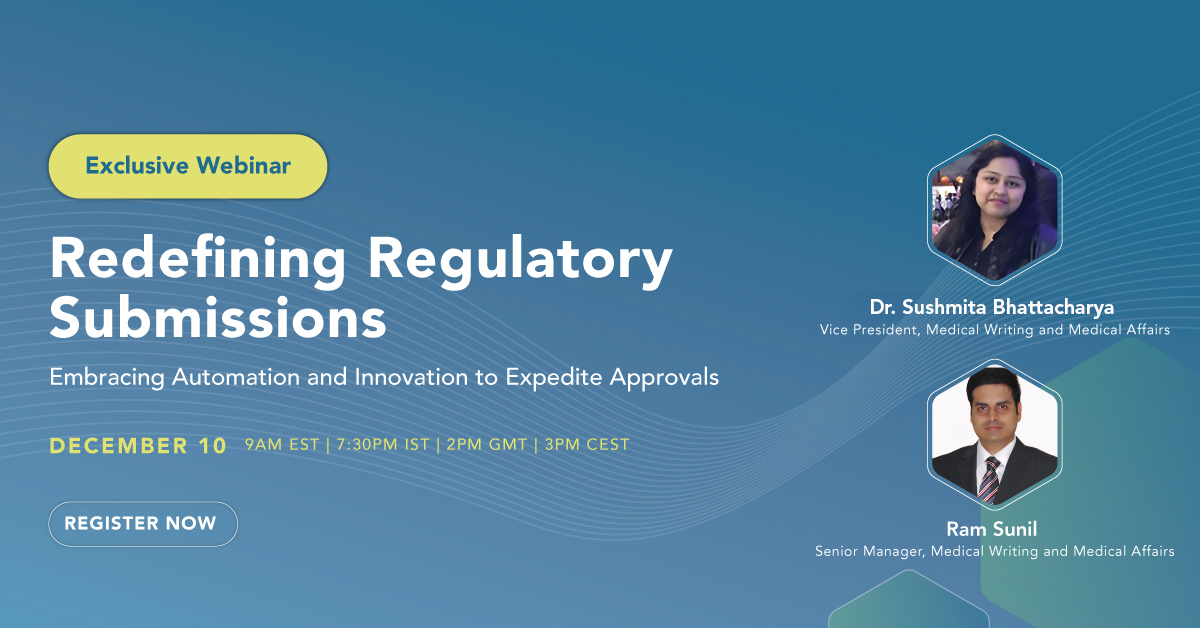
This insightful webinar is designed to take a forward-thinking approach, exploring the promising potential of emerging technological tools to accelerate and transform the preparation of regulatory submissions.
Currently, the regulatory submission process is burdened by the vast amount of documentation, complex guidelines, and repetitive content across multiple documents. Additionally, the often-cumbersome writing processes demand numerous rounds of review for the same material, driving up costs and compromising both efficiency and quality. This contributes to the already lengthy timelines for bringing drugs from research to patients.
Innovations such as structured and collaborative authoring, lean writing and automation are gradually reshaping workflows. These advancements promise faster, more efficient, and more robust marketing authorization applications, potentially ushering in a transformative shift in the industry — an exciting evolution that calls for thoughtful and responsible application of these technologies.
For medical devices, particularly, the integration of AI-driven authoring and automated content management is transforming how regulatory documents are developed and maintained.
These technologies streamline the preparation of documents for technical documentation such as Clinical Evaluation Reports (CERs), Performance Evaluation Reports (PERs), and Post-Market Clinical Follow-up (PMCF) plans and reports. They can also help maintain traceability, enable dynamic content reuse, support real-time version control, and ensure regulatory compliance with MDR and IVDR requirements.
As medical device submissions are increasingly adopting structured and modular content, automation and AI can significantly reduce authoring time while enhancing consistency and improving overall accuracy and regulatory compliance.

